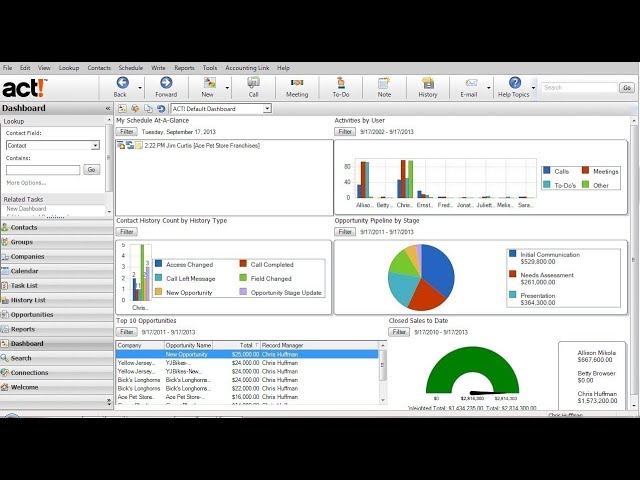
A customer relationship management (CRM) software act is a tool that helps businesses manage their relationships with customers. It can track customer interactions, manage customer data, and automate marketing and sales processes. CRM software can help businesses improve customer service, increase sales, and build stronger customer relationships.
CRM software has become increasingly important in recent years as businesses have realized the importance of customer relationship management. In today’s competitive market, businesses need to be able to track and manage their customer interactions in order to stay ahead of the competition. CRM software can help businesses do this by providing them with a centralized view of all customer data. This data can then be used to create targeted marketing campaigns, improve customer service, and build stronger customer relationships.
The history of CRM software dates back to the early days of computing. The first CRM systems were developed in the 1980s, and they were used to track customer data and manage sales pipelines. Over the years, CRM systems have evolved to become more sophisticated and comprehensive. Today, CRM software can be used to manage all aspects of customer relationships, from marketing and sales to customer service and support.
CRM Software Act
CRM software act is a critical tool for businesses of all sizes. It can help businesses track and manage their customer interactions, automate marketing and sales processes, and improve customer service. Here are six key aspects of CRM software act:
- Customer data management: CRM software can help businesses collect, store, and manage customer data. This data can include customer contact information, purchase history, and preferences.
- Marketing automation: CRM software can help businesses automate their marketing campaigns. This can include sending out email newsletters, creating social media posts, and tracking the results of marketing campaigns.
- Sales force automation: CRM software can help businesses automate their sales processes. This can include tracking sales leads, managing customer accounts, and closing deals.
- Customer service management: CRM software can help businesses manage their customer service interactions. This can include tracking customer support tickets, resolving customer issues, and providing customer feedback.
- Reporting and analytics: CRM software can help businesses track and analyze their customer data. This data can be used to generate reports and insights that can help businesses improve their customer relationships.
- Integration with other business systems: CRM software can be integrated with other business systems, such as accounting software, ERP systems, and e-commerce platforms. This integration can help businesses streamline their operations and improve their overall efficiency.
These are just a few of the key aspects of CRM software act. By understanding these aspects, businesses can better understand how CRM software can help them improve their customer relationships and grow their business.
Customer data management: CRM software can help businesses collect, store, and manage customer data. This data can include customer contact information, purchase history, and preferences.
Customer data management is a critical aspect of CRM software act. It allows businesses to collect, store, and manage all of their customer data in one place. This data can then be used to create targeted marketing campaigns, improve customer service, and build stronger customer relationships.
-
Facet 1: Centralized data repository
CRM software provides a centralized data repository for all customer data. This includes customer contact information, purchase history, and preferences. By having all of this data in one place, businesses can get a complete view of each customer and their relationship with the business. -
Facet 2: Data segmentation
CRM software can be used to segment customer data based on a variety of criteria, such as demographics, purchase history, and behavior. This allows businesses to create targeted marketing campaigns that are more likely to resonate with each customer segment. -
Facet 3: Data analysis
CRM software can be used to analyze customer data to identify trends and patterns. This information can be used to improve customer service, develop new products and services, and make better business decisions. -
Facet 4: Data security
CRM software provides robust data security features to protect customer data from unauthorized access. This is important because customer data is often sensitive and confidential.
Customer data management is a key aspect of CRM software act. By understanding the different facets of customer data management, businesses can better understand how CRM software can help them improve their customer relationships and grow their business.
Marketing automation: CRM software can help businesses automate their marketing campaigns. This can include sending out email newsletters, creating social media posts, and tracking the results of marketing campaigns.
Marketing automation is a key component of CRM software act. It allows businesses to automate their marketing campaigns, which can save time and money. Marketing automation can also help businesses improve the effectiveness of their marketing campaigns by tracking the results and making adjustments accordingly.
There are many different types of marketing automation tools available. Some of the most common tools include email marketing software, social media management software, and marketing analytics software. Businesses can choose the tools that best fit their needs and budget.
Here are some examples of how businesses can use marketing automation to improve their marketing campaigns:
- Sending out email newsletters: Businesses can use marketing automation to send out email newsletters to their customers and prospects. Email newsletters can be used to promote new products and services, share company news, and build relationships with customers.
- Creating social media posts: Businesses can use marketing automation to create social media posts for their Facebook, Twitter, and LinkedIn accounts. Social media posts can be used to promote new products and services, share company news, and engage with customers.
- Tracking the results of marketing campaigns: Businesses can use marketing automation to track the results of their marketing campaigns. This information can be used to measure the effectiveness of marketing campaigns and make adjustments accordingly.
Marketing automation is a powerful tool that can help businesses improve their marketing campaigns. By automating repetitive tasks and tracking the results of marketing campaigns, businesses can save time and money, and improve the effectiveness of their marketing efforts.
Sales force automation: CRM software can help businesses automate their sales processes. This can include tracking sales leads, managing customer accounts, and closing deals.
Sales force automation is a critical component of CRM software act. It allows businesses to automate their sales processes, which can save time and money. Sales force automation can also help businesses improve the effectiveness of their sales processes by tracking the results and making adjustments accordingly.
There are many different types of sales force automation tools available. Some of the most common tools include sales lead management software, customer relationship management (CRM) software, and sales forecasting software. Businesses can choose the tools that best fit their needs and budget.
Here are some examples of how businesses can use sales force automation to improve their sales processes:
- Tracking sales leads: Businesses can use sales force automation to track sales leads from the initial contact to the final sale. This information can be used to identify and qualify sales leads, and to prioritize sales efforts.
- Managing customer accounts: Businesses can use sales force automation to manage customer accounts. This information can be used to track customer interactions, identify customer needs, and provide customer support.
- Closing deals: Businesses can use sales force automation to close deals. This information can be used to track the progress of sales opportunities, identify potential roadblocks, and close deals more quickly.
Sales force automation is a powerful tool that can help businesses improve their sales processes. By automating repetitive tasks and tracking the results of sales processes, businesses can save time and money, and improve the effectiveness of their sales efforts.
Conclusion
Sales force automation is a critical component of CRM software act. By understanding the connection between sales force automation and CRM software act, businesses can better understand how CRM software can help them improve their sales processes and grow their business.
Customer service management: CRM software can help businesses manage their customer service interactions. This can include tracking customer support tickets, resolving customer issues, and providing customer feedback.
Customer service management is a critical component of CRM software act. It allows businesses to track and manage all of their customer service interactions in one place. This can help businesses improve the efficiency and effectiveness of their customer service operations.
There are many different aspects to customer service management, including:
- Tracking customer support tickets
- Resolving customer issues
- Providing customer feedback
CRM software can help businesses with all of these aspects of customer service management. By providing a centralized platform for tracking and managing customer service interactions, CRM software can help businesses improve the efficiency of their customer service operations. CRM software can also help businesses improve the effectiveness of their customer service operations by providing tools for resolving customer issues and providing customer feedback.
For example, CRM software can be used to track the status of customer support tickets, assign tickets to the appropriate customer service representatives, and track the resolution time of tickets. CRM software can also be used to create knowledge bases and FAQs that can be used by customer service representatives to resolve customer issues more quickly and efficiently.
In addition, CRM software can be used to collect and track customer feedback. This feedback can be used to improve the quality of customer service and to identify areas where improvements can be made.
Overall, CRM software is a valuable tool for businesses that want to improve the efficiency and effectiveness of their customer service operations.
Conclusion
Customer service management is a critical component of CRM software act. By understanding the connection between customer service management and CRM software act, businesses can better understand how CRM software can help them improve their customer service operations and grow their business.
Reporting and analytics: CRM software can help businesses track and analyze their customer data. This data can be used to generate reports and insights that can help businesses improve their customer relationships.
Reporting and analytics are critical components of CRM software act. They allow businesses to track and analyze their customer data in order to gain insights into customer behavior, preferences, and trends. This information can then be used to improve customer relationships and grow the business.
There are many different types of reports and analytics that can be generated from CRM software. Some of the most common reports include:
- Customer lifetime value reports
- Customer churn reports
- Sales pipeline reports
- Marketing campaign reports
- Customer satisfaction reports
These reports can be used to track key metrics such as customer acquisition cost, customer retention rate, and average revenue per customer. This information can then be used to make informed decisions about how to improve customer relationships and grow the business.
For example, a business might use a customer lifetime value report to identify their most valuable customers. This information could then be used to develop targeted marketing campaigns to these customers in order to increase their lifetime value.
Another example would be a business using a customer churn report to identify customers who are at risk of churning. This information could then be used to develop targeted customer retention campaigns to these customers in order to reduce churn.
Overall, reporting and analytics are essential components of CRM software act. By understanding the connection between reporting and analytics and CRM software act, businesses can better understand how CRM software can help them improve their customer relationships and grow their business.
Conclusion
Reporting and analytics are critical components of CRM software act. By understanding the connection between reporting and analytics and CRM software act, businesses can better understand how CRM software can help them improve their customer relationships and grow their business.
Integration with other business systems: CRM software can be integrated with other business systems, such as accounting software, ERP systems, and e-commerce platforms. This integration can help businesses streamline their operations and improve their overall efficiency.
CRM software act is not just about managing customer relationships. It is also about integrating with other business systems to create a seamless flow of information. This integration can help businesses streamline their operations and improve their overall efficiency.
-
Facet 1: Centralized data repository
CRM software can be integrated with other business systems to create a centralized data repository. This data can include customer data, sales data, marketing data, and financial data. By having all of this data in one place, businesses can get a complete view of their business and make better decisions. -
Facet 2: Automated processes
CRM software can be integrated with other business systems to automate processes. For example, CRM software can be integrated with accounting software to automate the process of invoicing customers. This can save businesses time and money, and it can also help to reduce errors. -
Facet 3: Improved communication
CRM software can be integrated with other business systems to improve communication. For example, CRM software can be integrated with email marketing software to send out targeted email campaigns to customers. This can help businesses to stay in touch with their customers and build stronger relationships. -
Facet 4: Increased efficiency
CRM software can be integrated with other business systems to increase efficiency. For example, CRM software can be integrated with e-commerce platforms to automate the process of order fulfillment. This can save businesses time and money, and it can also help to improve customer satisfaction.
These are just a few of the benefits of integrating CRM software with other business systems. By understanding these benefits, businesses can better understand how CRM software act can help them streamline their operations and improve their overall efficiency.
FAQs on CRM Software Act
CRM software act is a topic that can be complex and confusing. That’s why we’ve put together this FAQ section to answer some of the most common questions about CRM software act.
Question 1: What is CRM software act?
CRM software act is a set of laws and regulations that govern the use of customer relationship management (CRM) software.
Question 2: Who does CRM software act apply to?
CRM software act applies to any business that uses CRM software to manage customer data.
Question 3: What are the key requirements of CRM software act?
The key requirements of CRM software act include:
- Businesses must have a privacy policy that outlines how they will use customer data.
- Businesses must obtain consent from customers before collecting their data.
- Businesses must use customer data in a fair and ethical manner.
Question 4: What are the benefits of CRM software act?
CRM software act provides a number of benefits, including:
- Protecting customer privacy
- Promoting fair and ethical use of customer data
- Increasing trust between businesses and customers
Question 5: What are the penalties for violating CRM software act?
Businesses that violate CRM software act may be subject to a variety of penalties, including fines and imprisonment.
Question 6: How can I learn more about CRM software act?
There are a number of resources available to help you learn more about CRM software act. You can visit the website of your local consumer protection agency or consult with an attorney who specializes in privacy law.
Summary of key takeaways or final thought
CRM software act is an important law that protects customer privacy. Businesses that use CRM software must comply with the requirements of CRM software act in order to avoid penalties.
Transition to the next article section
Now that you have a better understanding of CRM software act, you can learn more about how to use CRM software to improve your customer relationships.
Tips for Using CRM Software Act
CRM software act can be a complex and challenging topic. However, by following these tips, you can ensure that your business is in compliance with the law and that you are using CRM software in a way that protects customer privacy.
Tip 1: Develop a privacy policy.
The first step to complying with CRM software act is to develop a privacy policy. This policy should outline how your business will collect, use, and disclose customer data. The policy should be clear and concise, and it should be easily accessible to customers.
Tip 2: Obtain consent from customers.
Before you collect any customer data, you must obtain consent from the customer. Consent can be obtained in a variety of ways, such as through a written agreement, a verbal agreement, or an online form.
Tip 3: Use customer data in a fair and ethical manner.
Once you have collected customer data, you must use it in a fair and ethical manner. This means that you should only use the data for the purposes that you have disclosed to the customer. You should also take steps to protect the data from unauthorized access and use.
Tip 4: Keep customer data secure.
Customer data is valuable, and it is important to protect it from unauthorized access and use. You should implement strong security measures to protect customer data, such as encryption, access controls, and firewalls.
Tip 5: Train your employees on CRM software act.
It is important to train your employees on CRM software act. This will help to ensure that your employees are aware of their obligations under the law and that they are using CRM software in a compliant manner.
Summary of key takeaways or benefits
By following these tips, you can ensure that your business is in compliance with CRM software act and that you are using CRM software in a way that protects customer privacy.
Transition to the article’s conclusion
CRM software act is an important law that protects customer privacy. By following these tips, you can ensure that your business is in compliance with the law and that you are using CRM software in a way that protects customer privacy.
Conclusion
CRM software act is a complex and ever-changing area of law. However, by understanding the key requirements of the law and by following best practices, businesses can ensure that they are in compliance with the law and that they are using CRM software in a way that protects customer privacy.
CRM software act is an important law that protects customer privacy. By complying with the law, businesses can help to build trust with customers and create a more positive customer experience.
Youtube Video: